The Science and Benefits of Cupping Therapy (Myofascial Decompression)

Dr. Pawan Yogi
MPT (Neurology) | Chief Rehab Specialist
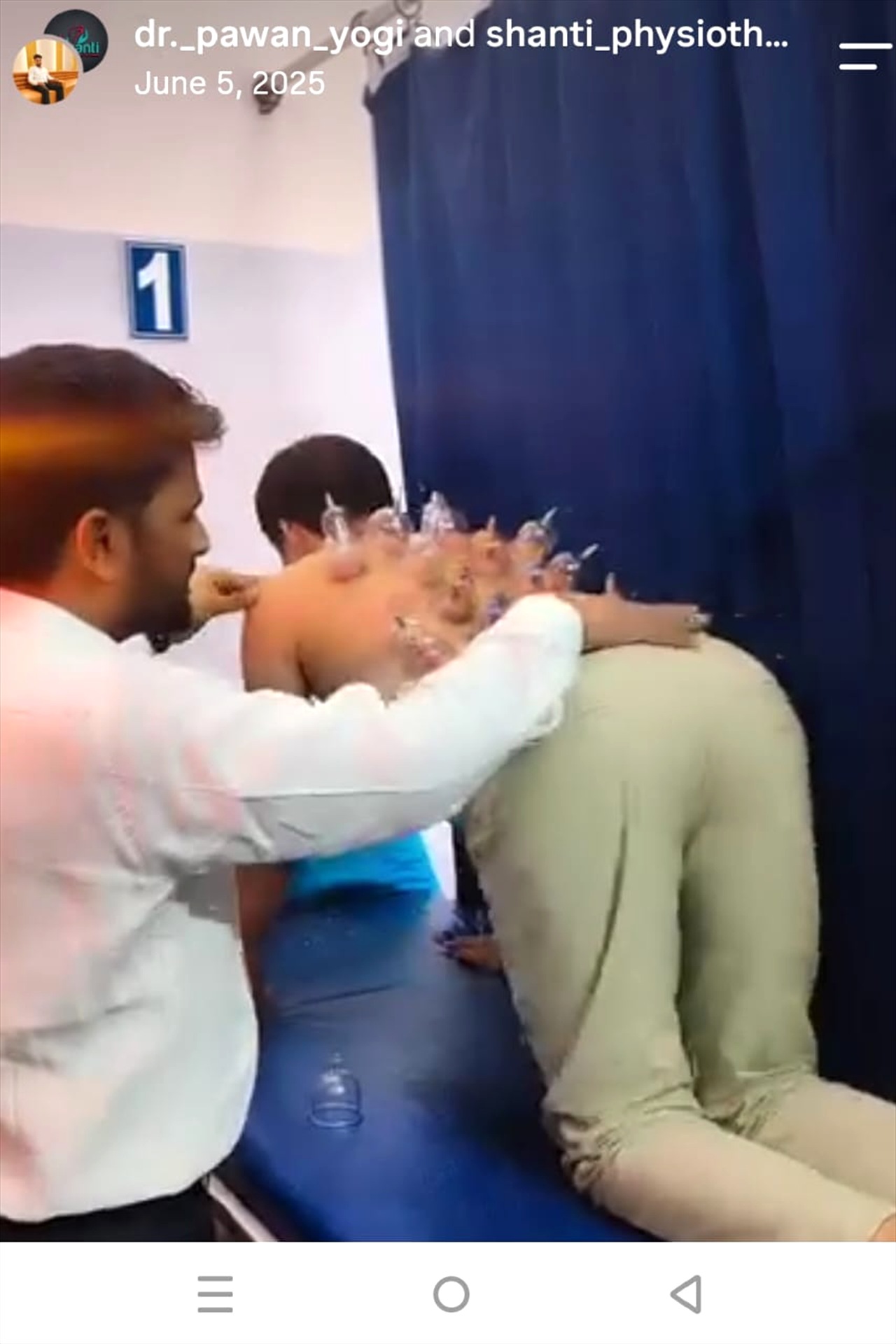
You have probably seen athletes, particularly swimmers and runners, with distinct circular bruising marks on their backs. These circular marks are the result of Cupping Therapy. Far from being a modern trend, cupping is an ancient healing art that modern sports science has integrated under the name **Myofascial Decompression**.
At Shri Shanti Physiotherapy Center (often searched as shri shanti physiothay clinic), we utilize medical-grade silicone and plastic suction cups. Under the expert guidance of Dr. Pawan Yogi in Chirawa, we use this therapy to release muscle tension, promote local blood circulation, and speed up recovery times.
What is Cupping Therapy?
Most physical therapies (like massage, dry needling, or manual mobilization) apply positive pressure—compressing muscle tissue downwards. Cupping therapy is unique because it applies **negative pressure**.
By placing cups on the skin and creating a vacuum (using heat or a suction pump), the skin, fascia, and superficial muscle layers are drawn upward into the cup. This decompresses the tissues underneath, lifting them away from the bone and stretching the tight fascial sheath.
The Scientific Benefits of Cupping
Though it looks simple, the suction effect triggers profound physiological changes:
- Myofascial Decompression: Fascia is a web-like sheath wrapping around all muscles. Poor posture or injury makes fascia sticky, binding muscles and restricting movement. Suction pulls fascia away from the muscle, breaking structural adhesions.
- Dramatically Increased Blood Flow: The vacuum dilates blood vessels, pulling fresh oxygen-rich blood into the tight muscle fibers, speeding up cellular recovery.
- Lymphatic Drainage: Helps flush metabolic waste, lactic acid, and inflammatory fluids out of muscle tissues into the lymphatic system.
- Pain Gateway Interruption: Stimulates sensory nerve endings in the skin, which overrides the nervous system's chronic pain signals.
What Do the Circular Marks Mean?
Contrary to popular belief, these marks are not bruises caused by blunt impact. The suction draws stagnant blood and metabolic waste up from deep tissues to the surface, where the lymphatic system can process it. The darker the mark, the higher the stagnation in that muscle. They are completely painless and fade away within 3 to 7 days.
Dry vs. Wet Cupping: What is the Difference?
At our clinic, we perform different types of cupping based on patient requirements:
- Dry Cupping: Suction is created on target areas and left static for 5 to 10 minutes to release deep trigger points.
- Dynamic (Gliding) Cupping: We apply therapeutic oils to the skin and slide the suction cups along muscle fibers. This works as an intensive deep-tissue massage, releasing large bands of fascia.
- Wet Cupping (Hijama): Involves making tiny superficial scratches on the skin before applying a second suction, drawing out tiny amounts of stagnant blood. *Performed strictly under sterile clinical protocols.*
Why Choose Shri Shanti Physiotherapy Clinic?
Cupping therapy should only be performed by a medical professional who understands the location of blood vessels, nerves, and muscle groups. At Shri Shanti Physiotherapy Center, Station Chungi Road, Chirawa, Dr. Pawan Yogi ensures that the vacuum levels are set comfortably, and all equipment is medically sterilized. We integrate cupping with structural exercises, helping you achieve lasting mobility and pain relief.
Experience the Decompression Difference
Suffering from back stiffness, chronic fatigue, or muscle tension? Consult Dr. Pawan Yogi to try clinical Cupping Therapy today.